Lessons Learned Program (LLP)
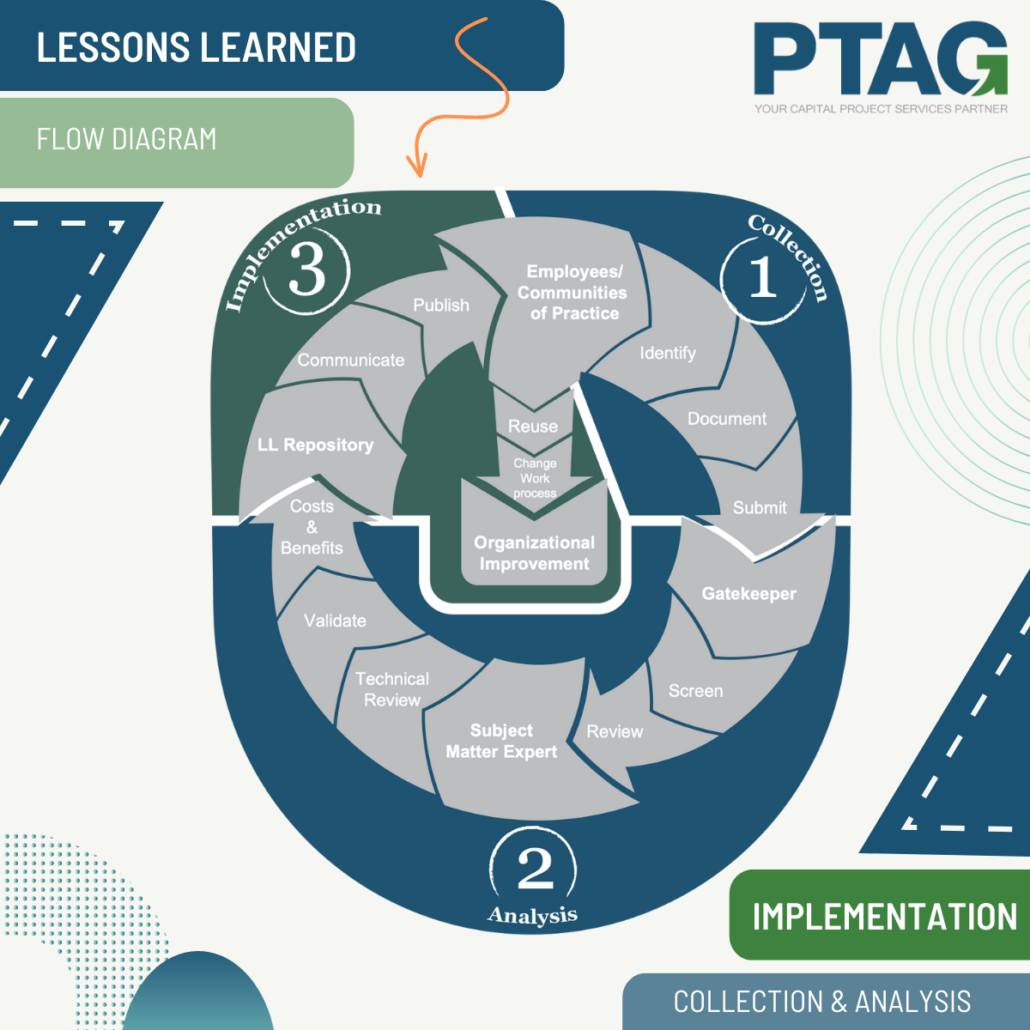
Lessons Learned (LL) is knowledge gained from experience, successful or otherwise, to improve future performance. Each company should develop a Lessons Learned Program (LLP) to promote success and achievement. The Lessons Learned Program involves the people, processes, and tools that support an organization’s collection, analysis, and implementation of validated lessons learned. People possess organizational knowledge. The procedures must be structured to allow people to collect, analyze, and share knowledge easily.
Overall, Lessons Learned Programs are essential to the construction industry. The key to achieving an effective and sustainable Lessons Learned Program is the degree of continuing commitment and leadership from the organization’s top management. Lessons Learned will become even more critical as employees age and retire and turnover increases. Additionally, globalization also increases the need for LLPs to ensure that an organization is able to address critical issues such as culture, language, distance, and diversity.
- Every organization should move forward in developing or improving a lessons learned program.
- Leadership, top-level and tactical, is the essential prerequisite for the success of these programs.
- Organizations should become “teaching” organizations rather than organizations that only collect or learn from the past in an ad hoc or passive manner.
- Organizations should adopt an active implementation strategy to ensure that lessons are used.
- Although technology is vital in developing and using the Lessons Learned Program, the importance of organizational culture should not be underestimated.
- The quality of lessons learned is more important than the quantity of lessons in the database.
- Both owners and contractors can benefit from lessons learned programs. Necessarily, the captured lessons learned will be focused on different areas based on the organization’s business needs.
There are three main components to the Lessons Learned Program (LLP):
- The collection involves gathering data and information on the experiences of individuals and teams in the organization. Collection can occur at multiple stages of project execution.
- Analysis can be performed by a team or a subject matter expert (SME). This step is necessary to ensure the information gathered is relevant, correct, and easily understood.
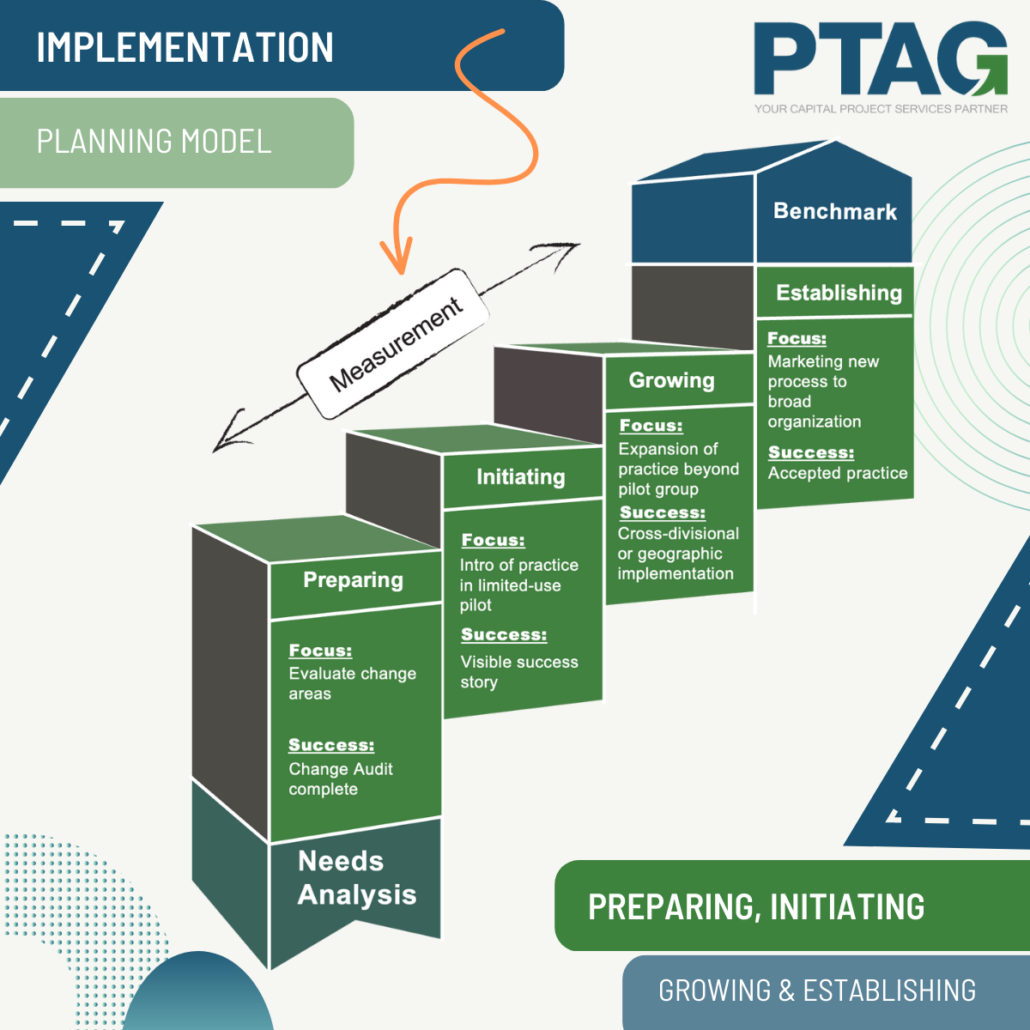
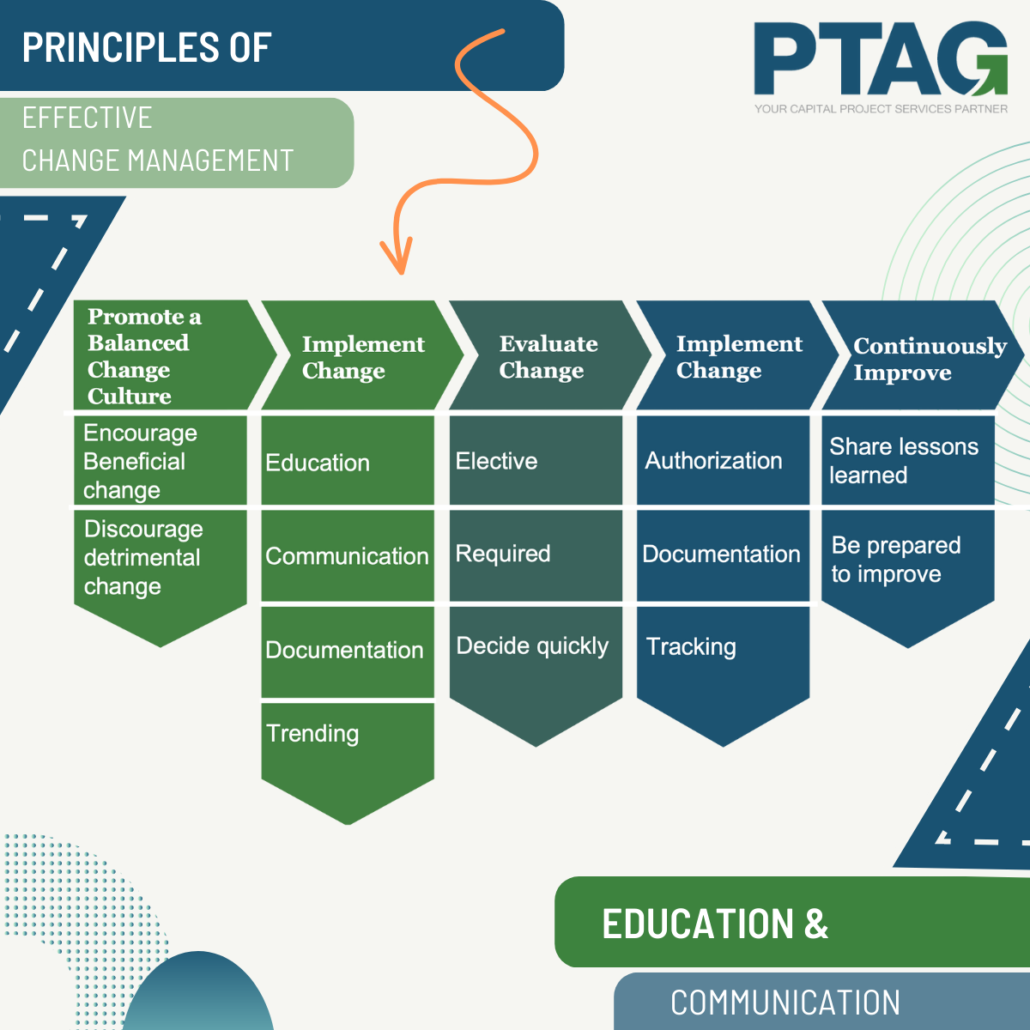
- Implementation can involve changes in practices and procedures or changes in the project execution. Lessons learned should be implemented quickly to ensure they are helpful for the organization.
PTAG has industry-specific teams ready to manage and organize this knowledge to benefit your organization in the form of a reduction of total project cost and/or reduction of project schedule.