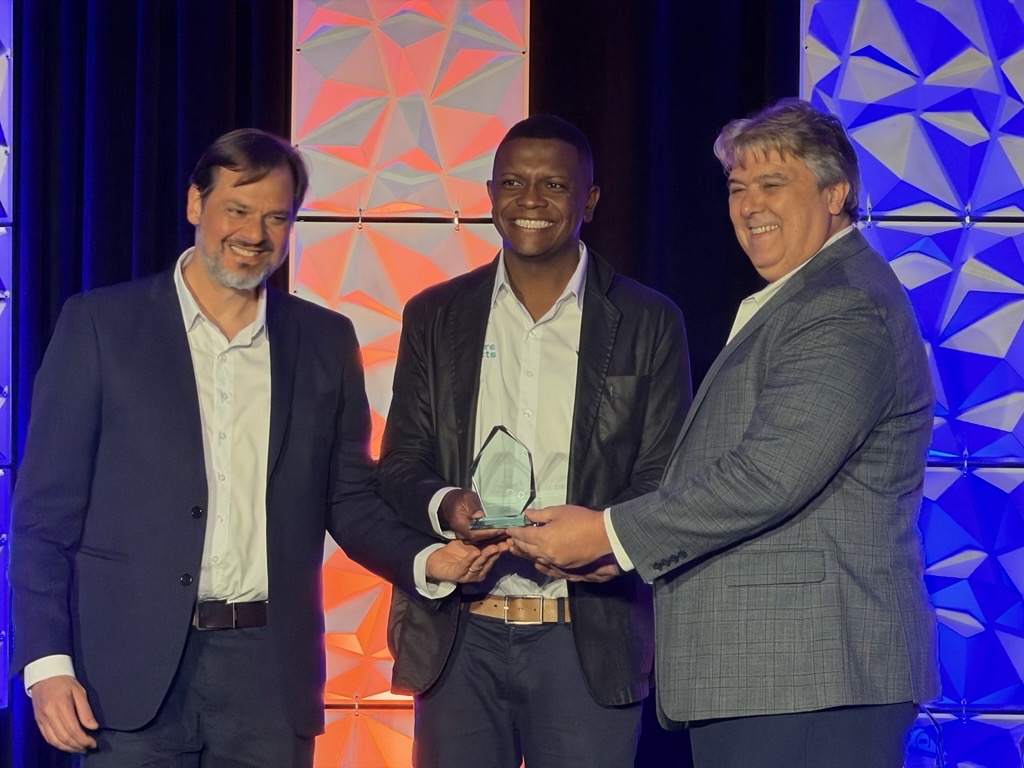
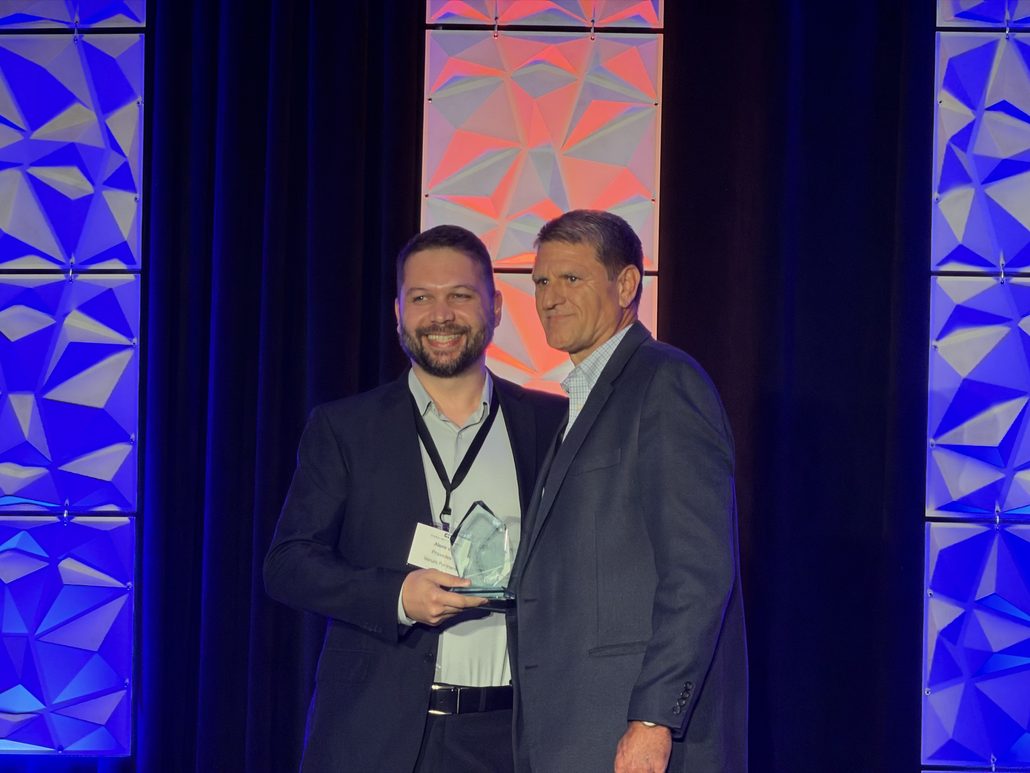
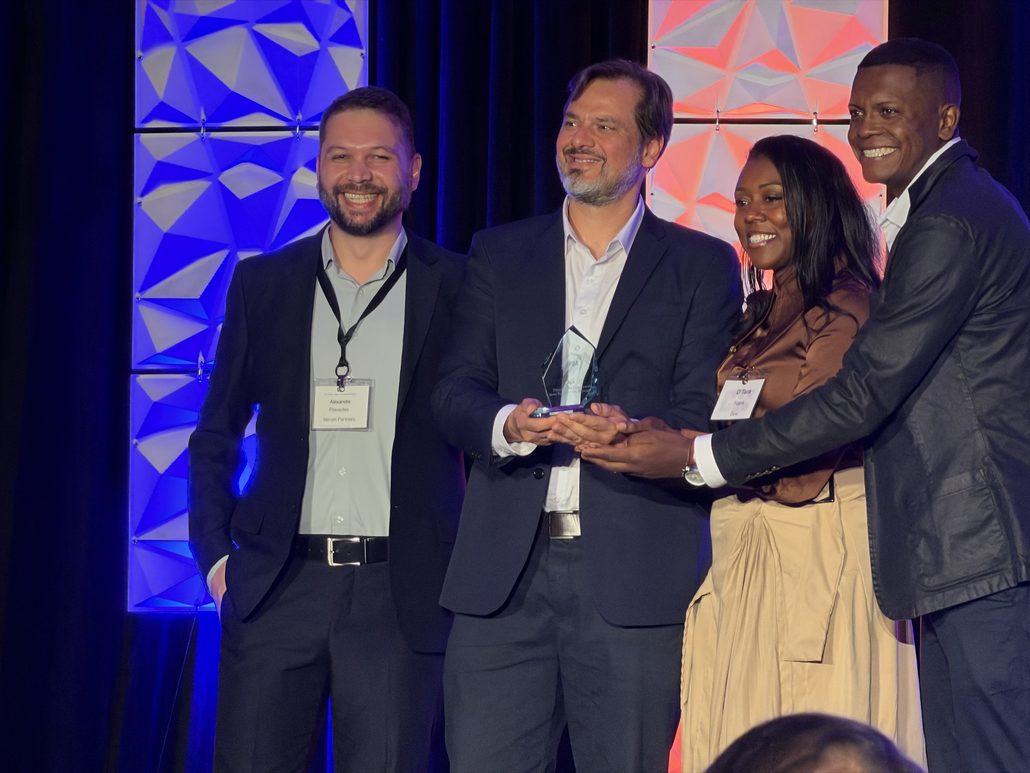
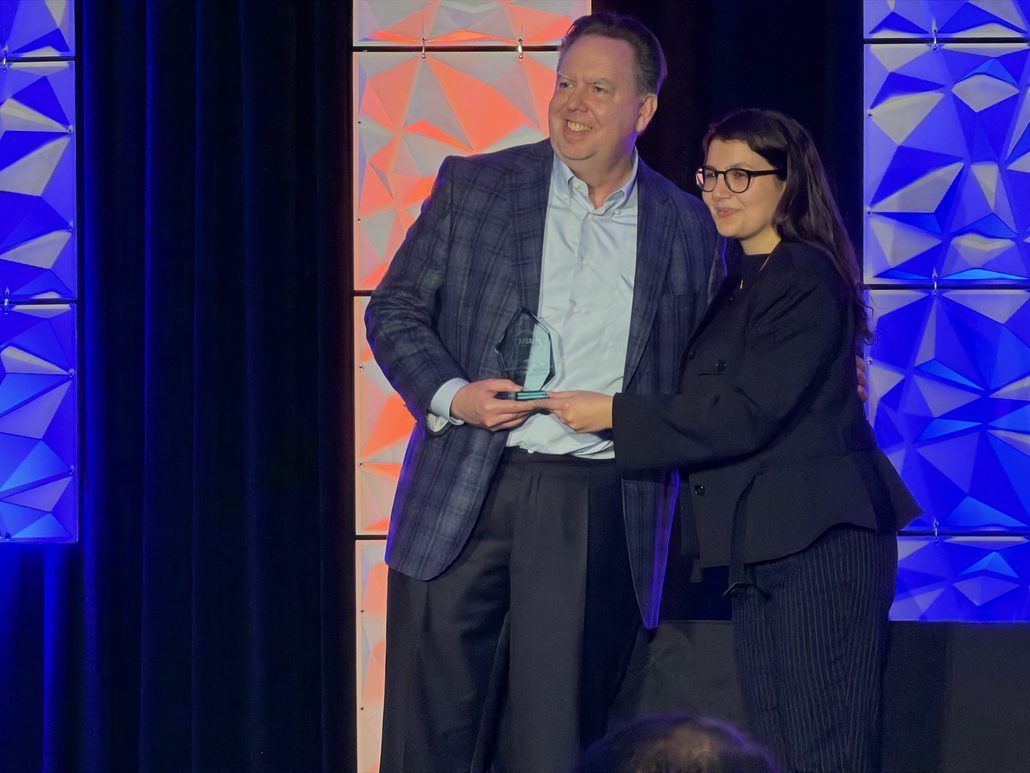
PTAG congratulates the industry leaders, project teams, innovators, and emerging professionals recognized at the 2026 AWP+ Awards & Social Gala, held on November 19 during the CII Global AWP+ Conference in Conroe, Texas.
The awards, presented by the Advanced Project Delivery Association (APDA), celebrate individuals and organizations making meaningful contributions to Advanced Work Packaging (AWP), digital innovation, field execution, and capital project delivery.
As a Headline Sponsor of the 2026 CII Global AWP+ Conference, PTAG is proud to recognize the achievements of this year’s recipients and the teams whose dedication continues to move the industry forward.
Recognizing the 2026 AWP+ Award Recipients
This year’s awards highlighted outstanding contributions across six categories:
Vanguard Award (Lifetime Achievement): Lloyd Rankin Recognizing a distinguished career dedicated to advancing capital project delivery and Advanced Work Packaging.
Technology Advancement Award: Vale, Intelligent TLO3, S11D Serra Sul Recognizing innovation in digital project delivery through intelligent automation that improves operational efficiency, safety, and execution.
Excellence in Field Execution Award: Alexandre Praxedes, Vale Celebrating exceptional leadership and measurable improvements in field execution through disciplined WorkFace Planning.
Project of the Year Award: Vale, Serra Sul +20 Mtpa Expansion Recognizing excellence in applying advanced project delivery practices to a major capital project.
Academic Leadership Award: Dr. William J. O’Brien Honouring contributions to advancing industry knowledge, education, and research in capital project delivery.
Women in Construction Excellence Award: Carla Vivallos Cid, Codelco Recognizing leadership and contributions to advancing excellence within the construction industry.
Together, these recipients demonstrate how innovation, collaboration, and disciplined execution can improve project outcomes and strengthen the future of capital project delivery.
Investing in the Next Generation: 2026 APDA Scholarship Recipients
The evening also celebrated emerging professionals through the 2026 APDA Scholarship Program, recognizing promising talent committed to advancing the future of project delivery.
PTAG extends its congratulations to the confirmed scholarship recipients:
Surbhi Vijay Ghag
Uzair Razzaque Arain
Sima Kattan
The scholarship program reflects the importance of connecting education, mentorship, and industry experience to develop the next generation of project delivery professionals.
We also recognize the mentors who contribute their knowledge, guidance, and time to supporting these emerging leaders.
Recognizing the People Behind Project Success
Six weeks before the conference, PTAG encouraged the industry to nominate colleagues whose important contributions do not always receive the recognition they deserve.
The AWP+ Awards provided an opportunity to bring those contributions into the spotlight.
Behind every successful project, innovative solution, and industry advancement are individuals and teams committed to improving how capital projects are planned, managed, and delivered.
Their achievements reinforce the value of collaboration, knowledge sharing, continuous improvement, and the application of Advanced Work Packaging and Advanced Project Delivery practices.
Congratulations to All Recipients
PTAG congratulates the 2026 AWP+ Award recipients, APDA Scholarship recipients, nominees, mentors, and the teams supporting their achievements.
As the 2026 CII Global AWP+ Conference comes to a close, we celebrate the people driving progress across the industry and look forward to the continued advancement of project delivery practices.
PTAG is a Headline Sponsor of the 2026 CII Global AWP+ Conference, November 18–20, Conroe,Texas
/wp-content/uploads/2024/10/PTAG-Header-Logo-300x50.png00Elnaz Khaleghi/wp-content/uploads/2024/10/PTAG-Header-Logo-300x50.pngElnaz Khaleghi2026-11-20 13:05:372026-11-20 13:06:12Celebrating Excellence in Project Delivery: 2026 AWP+ Awards and APDA Scholarship Recipients
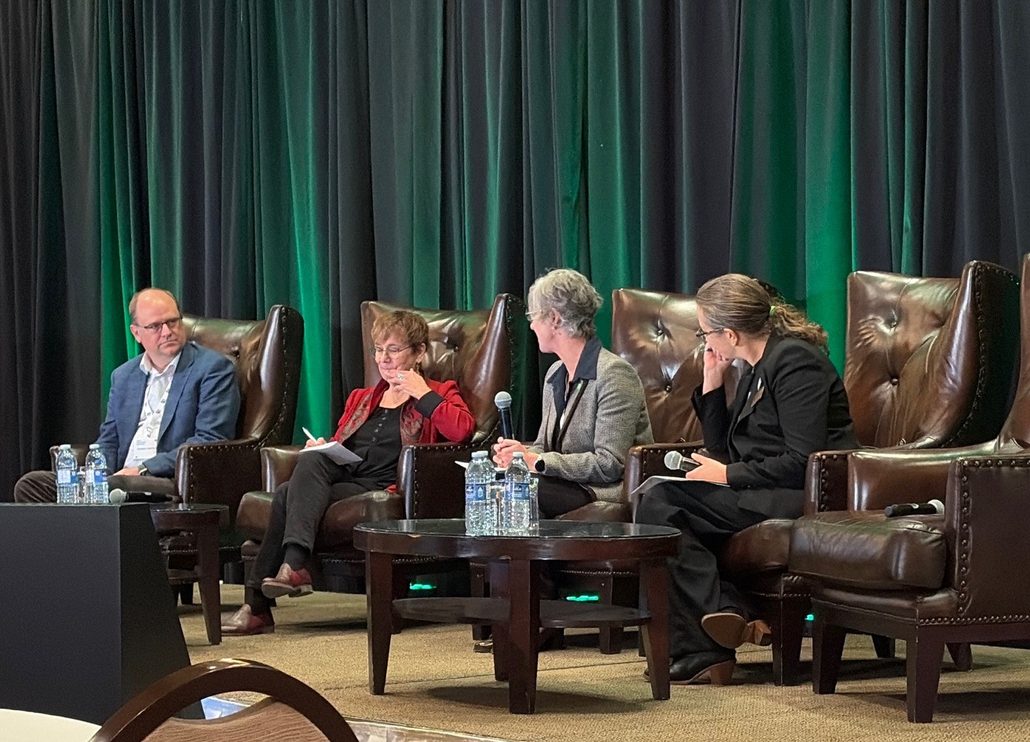
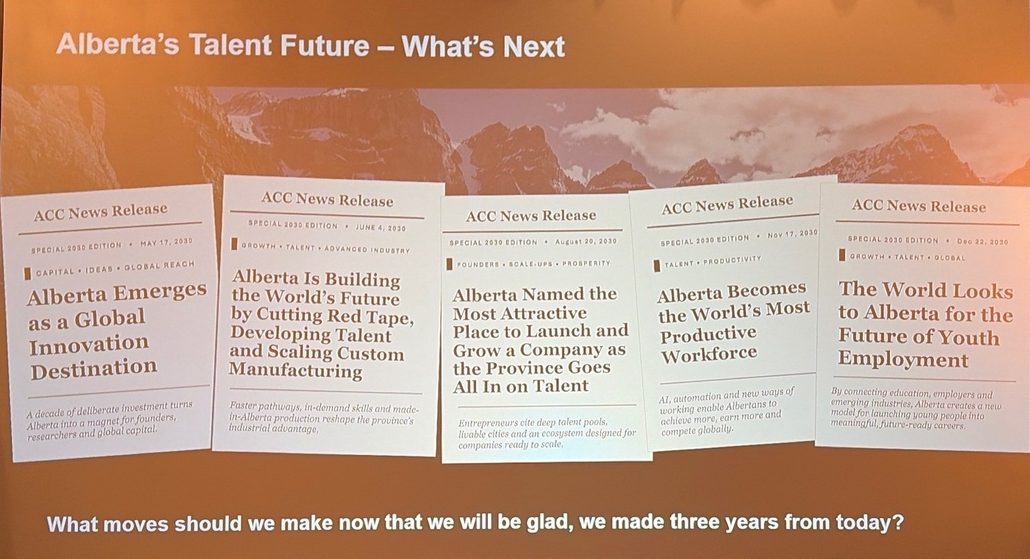
On November 18, employers, educators, government officials and workforce intermediaries filled a room in Edmonton for the fifth annual Talent Development Symposium, hosted by the Talent Development Task Force and co-chaired by the Alberta Chambers of Commerce (ACC) and the Alberta Post-Secondary Network (APSN). The numbers framing the day were stark. Alberta expects roughly 1.5 million job openings over the next decade, more than 60% of them requiring at least two years of post-secondary education. The province’s system will need about 43,000 more seats by 2033. And in mid-2025, 49% of Alberta employers reported moderate or significant staffing shortages.
This year, the Task Force asked for something different: less admiring of the problem, more evidence of what’s working. PTAG’s Workforce Development Practice Lead, Rachel Sumner, was in the room for the panels and took part in two of the afternoon’s working sessions, on career pathways and work-integrated learning, and on workforce data standards. What follows is what we heard, what we contributed, and why it matters for organizations building capital projects and capability in Alberta.
Alberta Is Treating Talent Like a Supply Chain
The clearest signal of the day was how far Alberta has moved toward a demand-led workforce system. Jeff Griffiths, Program Director of Talent Pipeline Management (TPM) at the ACC, described the shift in plain terms: making the employer “the end customer of the system” rather than a participant that simply takes whatever the system produces. TPM, an employer-led model developed by the U.S. Chamber of Commerce Foundation, treats talent as a supply chain, built backward from what employers actually need, how many, and when.
Alberta is the first provincial government in Canada to put its weight behind the model. Close to 40 people in the province have now been formally trained in TPM, compared with a handful across the rest of the country. The ACC has formalized an employer collaborative with the Alberta Aviation Aerospace Defence Council, is building others in construction, oil and gas, and tourism, and will host its next Talent Acceleration Summit in Calgary on February 10–11, 2027, focused on construction labour. Griffiths was blunt about why: the build-out ahead over the next 10 to 15 years “is going to make [the early 2000s] look like a picnic.”
Government is leaning in alongside it. Christopher McPherson, Deputy Minister of Jobs, Economy, Trade and Immigration, told the opening panel that 306 major projects began construction in Alberta in 2025, and that the province has had to revise its labour outlook after adding what it estimates are more than 100,000 jobs in six months. His advice to employers was direct: help government forecast accurately, “double and triple down” on TPM, and use the programs already on the table, including the Alberta Industry Skills Grant, the Canada-Alberta Productivity Grant, and the Alberta Youth Employment Incentive, which offers employers $4,000 for one hire aged 15 to 24 and $7,500 for two or more.
The Partnerships That Work Have Employers Investing Up Front
The Symposium’s success stories shared one feature: the employer didn’t wait at the end of the pipeline.
Josh Brewster, Associate Dean of Aviation Technology at SAIT, walked through the institute’s partnership with Lufthansa Technik, which is building a roughly 150,000-square-foot engine maintenance facility in Calgary expected to create 160 highly technical jobs by 2030. Together they co-designed a one-year gas turbine technician certificate. Lufthansa Technik co-recruits and pre-hires sponsored students before training starts, covers tuition, tooling and PPE, and pays a small wage while they study. The latest intake drew more than 130 qualified applicants for 10 sponsored seats, and every sponsored student is still on track. Just as important for the system, employer-sponsored cohorts are priced at the actual cost of delivery, so the partnership adds net-new seats rather than displacing domestic learners. SAIT is now extending the model to heavy equipment technicians with Finning and Caterpillar. Brewster’s formula: “Start with a real workforce need. Co-design a solution together, have both sides invest.”
Goodwill Alberta showed the retention side of the same equation. Heather Hicks, Vice President of Mission Impact, and Kirsten Harrison, Program Delivery Manager, described Goodwill Cares, a confidential navigator service, separate from HR, that helps team members with everything from transportation subsidies to recertifying foreign credentials. Since launching in 2023, Goodwill has cut annual turnover from 50% to a trending 25% across a workforce of about 1,200.
Edmonton Airports’ Director of Defence and Industry Development added the hard edge. Aircraft maintenance engineers are the region’s top constraint, a “missing middle” of mentors left the industry after the pandemic, and there is a limit to public training dollars. Her challenge to industry: be frank about the minimum viable product public institutions should provide, and pay for the specialized certification that has historically been subsidized by taxpayers.
Nuclear Is Coming West, and Small Businesses Are Asking How to Qualify
One of the morning’s sharpest questions came from the floor. Mary French, who leads employment, training and procurement for Energy Alberta on the proposed Peace River Nuclear Power Project, asked the panel how Alberta’s small and medium-sized businesses will reach the quality, safety and management-system standards that major projects, and nuclear in particular, demand. It’s the question she hears “over and over.”
It’s a fair one. The Peace River project is a proposed four-unit, up to 4,800 MW facility north of the Town of Peace River, now in the federal impact assessment process, with Energy Alberta targeting first-phase operation by 2035. Energy Alberta estimates it could support around 20,000 jobs a year through design and construction. Add pipeline work, a new Royal Canadian Air Force tanker base at Edmonton International Airport, and the broader defence build-out, and Alberta’s SMEs face a qualification gap, not just a hiring gap.
The panel’s answers pointed to levers PTAG clients should be watching: provincial and federal procurement thresholds being adjusted to bring more SMEs into major-project supply chains; Alberta’s shift toward outcomes-based safety regulation built on CSA standards; and interprovincial work on mutual recognition of training and credentials that McPherson said would “come to fruition in the next two months.” Edmonton Airports also credited industry associations, such as the Alberta Aviation Aerospace Defence Council, for running cohorts that get SMEs through the table-stakes certifications (ISO, cybersecurity, dangerous goods) needed to compete.
This is familiar ground for PTAG. Nuclear’s supply chain runs on the CSA N299 series and nuclear-grade quality expectations that most Alberta fabricators and contractors haven’t had to meet before. Getting an SME from “interested” to “qualified” is as much a workforce question (who holds the competencies, who trains the next cohort, who carries the quality culture on the shop floor) as it is a paperwork one.
What We Brought to the Table
In the afternoon working sessions, Rachel brought an industry voice, informed by her role at PTAG and as Chair of the Canadian Nuclear Association’s National Workforce Council, to three problems that run through every Alberta conversation about talent.
The demand signal is weaker than the system assumes. In the career pathways session, Rachel named the timing mismatch at the heart of workforce planning. “We could probably give you a six-month time horizon with some certainty,” she said of employers’ demand signals, “and yet it might take you four years to produce” the graduates. Her ask was for agility on both sides: ways to de-risk supply-side investments so institutions can scale programs up or down as employer certainty improves. She also pointed to an approach one large employer in her industry association has adopted, “recruit once, hire twice”: bring people in through internships or co-ops first, then make the offer. As she put it, that’s “the longest probationary period you’re going to ever offer anybody.”
Skilled trades need a new narrative. “When we’re going to build what we’re going to build here in Alberta, we’re going to need more skilled trades than we’ve ever trained,” Rachel told the session, noting that electrical apprenticeships now require college/university-level math. Building on the AI panel’s idea of “capability arbitrage” (finding low-cost routes from one skill to an adjacent one), she argued that focusing on skills rather than job titles lets people follow opportunity across the system. She also flagged that parents and school counsellors are being asked to act as workforce analysts without current data, and floated job-shadowing semesters in industry for teachers.
Data quality starts with employer workforce planning. In the data standards session, Rachel’s table took on the idea of a “single source of truth” for competencies. Rather than reinventing the wheel, she suggested Alberta adopt an internationally recognized competency framework, and encourage neighbouring provinces to do the same, so that skills data is interoperable. But she was candid about the upstream problem: “Quality of workforce planning is not improving. In fact, it’s diminishing because of the level of ambiguity around what job roles, what tasks, what activities we’re actually going to need to hire for.” If employers aren’t feeding good data into the system, she said, “no matter which single source system we consider truth, it’s not truth.” The fix includes closing the value loop so employers see something back for the data they share, and reusing data that already exists, such as anonymized payroll information, instead of adding more surveys.
Why This Matters for PTAG Clients in Alberta
Alberta’s workforce ecosystem is unusually well organized, but it rewards organizations that show up and plug in. Being in these rooms means PTAG can connect clients to what already exists instead of building from scratch:
A seat in demand-led collaboratives. We can help clients engage early with ACC’s TPM collaboratives and the February 2027 construction summit, so their requirements shape the training pipeline rather than arriving after programs are set.
Employer-sponsored training that actually scales. The SAIT–Lufthansa Technik model shows Alberta institutions will co-design and run cost-recovery cohorts. We help clients define the competencies, sponsorship terms and cohort size that make that conversation productive.
Public funding mapped to project timelines. From the Alberta Industry Skills Grant to the Canada-Alberta Productivity Grant and youth hiring incentives, we help clients line up the right program with the right phase of work.
SME and supply-chain readiness for nuclear and major projects. For owners and prime contractors, we help design workforce and qualification pathways that bring local and Indigenous-owned suppliers up to nuclear-grade expectations, drawing on our experience in Ontario’s nuclear sector.
Better demand signals. Our role and capability architecture work gives clients skills-level workforce plans they can share through TPM, with post-secondary partners, and with government forecasters, exactly the input every panel asked employers for.
A national lens. Through the CNA National Workforce Council and UNENE, we bring what’s working in other provinces to Alberta, and carry Alberta’s lessons, like TPM and cost-recovery cohorts, back to the national conversation, including on credential recognition and labour mobility.
The Symposium closed with a challenge from PrairiesCan’s Michelle Evans: “Does your ambition meet the moment?” For Alberta’s builders, meeting it means treating workforce as part of project delivery from day one.
Work with us
PTAG’s Workforce Development Practice works at the intersection of workforce strategy, project execution and stakeholder engagement. Rachel Sumner leads the Practice as Practice Lead and Senior Director, and also chairs the Canadian Nuclear Association’s National Workforce Council and serves as Senior Advisor on Workforce Initiatives with the University Network of Excellence in Nuclear Engineering (UNENE).
If your organization is planning major-project, nuclear or industrial capacity in Alberta and needs a workforce strategy connected to the people already solving these problems in the province, connect with Rachel and the Workforce Development Practice team.
/wp-content/uploads/2026/11/acc_logo-1-7f13ff.svg141188Rachel Sumner/wp-content/uploads/2024/10/PTAG-Header-Logo-300x50.pngRachel Sumner2026-11-20 10:49:212026-11-20 10:49:25Alberta is Building its Talent Supply Chain and PTAG is at the Table
Five members of the PTAG team will be at CII’s Fall Board of Advisors Meeting in Houston, November 17 to 18.
Representing PTAG are Deborah DeGezelle, Director of Education, Benchmarking & Performance Assessment; Dan Fahrer, Board Alternate and Chair of CII RT-442; Michael Dubreuil, Managing Partner and PTAG’s Advisor on the CII Board of Advisors; Jay Moser, Senior Partner, Energy & Industrial Projects; and Tedd Weitzman, Senior Advisor, PMIS Delivery, AI & Emerging Technology.
RT-442 exists because new nuclear has not held cost or schedule to target, and the front end planning tools the industry relies on were built for industrial projects, not for reactors. The team is tailoring FEP and the PDRI to the nuclear segment, SMRs included, and the output is a new PDRI rather than a commentary on the old one.
That work is why we are in the room. Owners carry the definition risk on these programs. We sit on their side of the table and keep the front end honest before sanction, which is the only point where PDRI changes a decision rather than documenting one.
The Board meeting wraps midday on the 18th. Deborah, Michael, Jay, and Tedd carry on to the Global AWP+ Conference, which opens the same day at the Hyatt Regency Conroe and runs through the 20th.
/wp-content/uploads/2023/10/CII-Partner-Logo-2.png122256Elnaz Khaleghi/wp-content/uploads/2024/10/PTAG-Header-Logo-300x50.pngElnaz Khaleghi2026-11-12 13:45:022026-11-12 13:45:07PTAG at CII’s Fall Board of Advisors Meeting
Veterans Day (United States) | Remembrance Day (Canada)
This Veterans Day and Remembrance Day, PTAG joins communities across the United States and Canada in honouring the brave men and women who have served and sacrificed in defence of our freedom and peace.
We remember those who made the ultimate sacrifice, recognize the courage and dedication of our veterans and active military personnel, and extend our heartfelt gratitude to the military families who have stood alongside them.
As we reflect on their service and sacrifices, we are reminded of the enduring importance of remembrance, respect, and gratitude for those who have served and continue to serve.
Today, we honour. We remember. Lest we forget.
/wp-content/uploads/2024/10/PTAG-Header-Logo-300x50.png00Elnaz Khaleghi/wp-content/uploads/2024/10/PTAG-Header-Logo-300x50.pngElnaz Khaleghi2026-11-11 09:30:442026-11-11 09:30:46Honouring Those Who Served
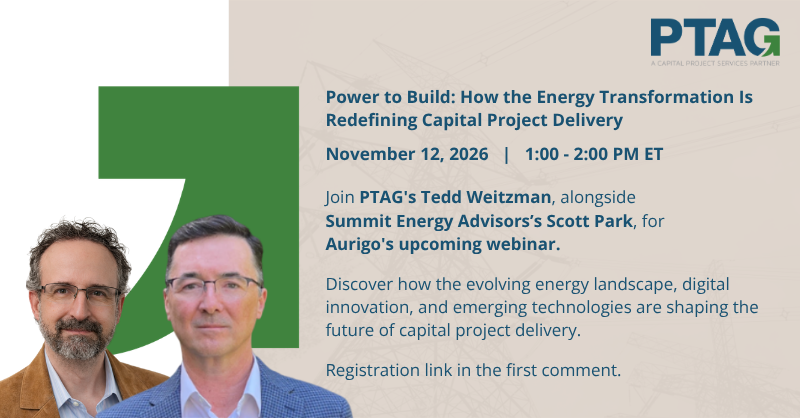
PTAG is pleased to announce that Tedd Weitzman, Senior Advisor, PMIS Delivery, AI & Emerging Technology, will be a featured speaker at Aurigo’s upcoming webinar, “Power to Build: How the Energy Transformation Is Redefining Capital Project Delivery,” taking place November 12, 2026, at 1:00 PM ET.
As the global energy landscape continues to evolve, the demand for resilient infrastructure, innovative technologies, and effective capital project delivery strategies is growing. Organizations across the energy sector are navigating increasingly complex projects while balancing cost, schedule, sustainability objectives, and operational performance.
Hosted by Aurigo, this webinar will explore how the ongoing energy transformation is influencing the planning, execution, and management of major capital projects.
Tedd will be joined by Scott Park, Owner and President of Summit Energy Advisors, to share industry perspectives on the challenges and opportunities emerging across the energy infrastructure landscape.
Register today to join the discussion and explore the future of capital project delivery in a rapidly changing energy landscape.
/wp-content/uploads/2026/11/Aurigo-logo-07f8bf.svg39132Elnaz Khaleghi/wp-content/uploads/2024/10/PTAG-Header-Logo-300x50.pngElnaz Khaleghi2026-11-04 10:40:052026-11-04 10:40:08PTAG’s Tedd Weitzman to Speak at Aurigo Webinar on the Future of Capital Project Delivery
PTAG’s Andrew Grant and Feroz Ashraf will be attending Capital Projects Symposium 2026 in Toronto, November 8 to 10.
Their focus is a practical one: on a mining capital program, what actually held between sanction and first production, and what did the team do differently at the gates to make it hold?
Capital Projects Symposium brings together leaders from financing, planning, and project delivery for three days of discussion around the realities of major capital programs.
For PTAG, the most valuable conversations are often the candid ones. Where did the program start to drift? Which assumptions failed? What did teams change at key decision gates? And which practices proved strong enough to carry through execution?
These are the questions that matter on mining programs where cost, schedule, scope, constructability, and operational readiness all need to stay aligned from sanction through first production.
Andrew and Feroz will be at the Chelsea Hotel throughout the event and welcome the opportunity to compare notes with owners and project leaders working through similar challenges.
If you are running a mining capital program or supporting one owner-side, contact Andrew Grant before November 4 to set up a time to connect.
/wp-content/uploads/2026/11/capital_projects_symposium_logo.jpeg200200Elnaz Khaleghi/wp-content/uploads/2024/10/PTAG-Header-Logo-300x50.pngElnaz Khaleghi2026-11-02 10:38:412026-11-02 10:38:43PTAG at Capital Projects Symposium (CPS) 2026